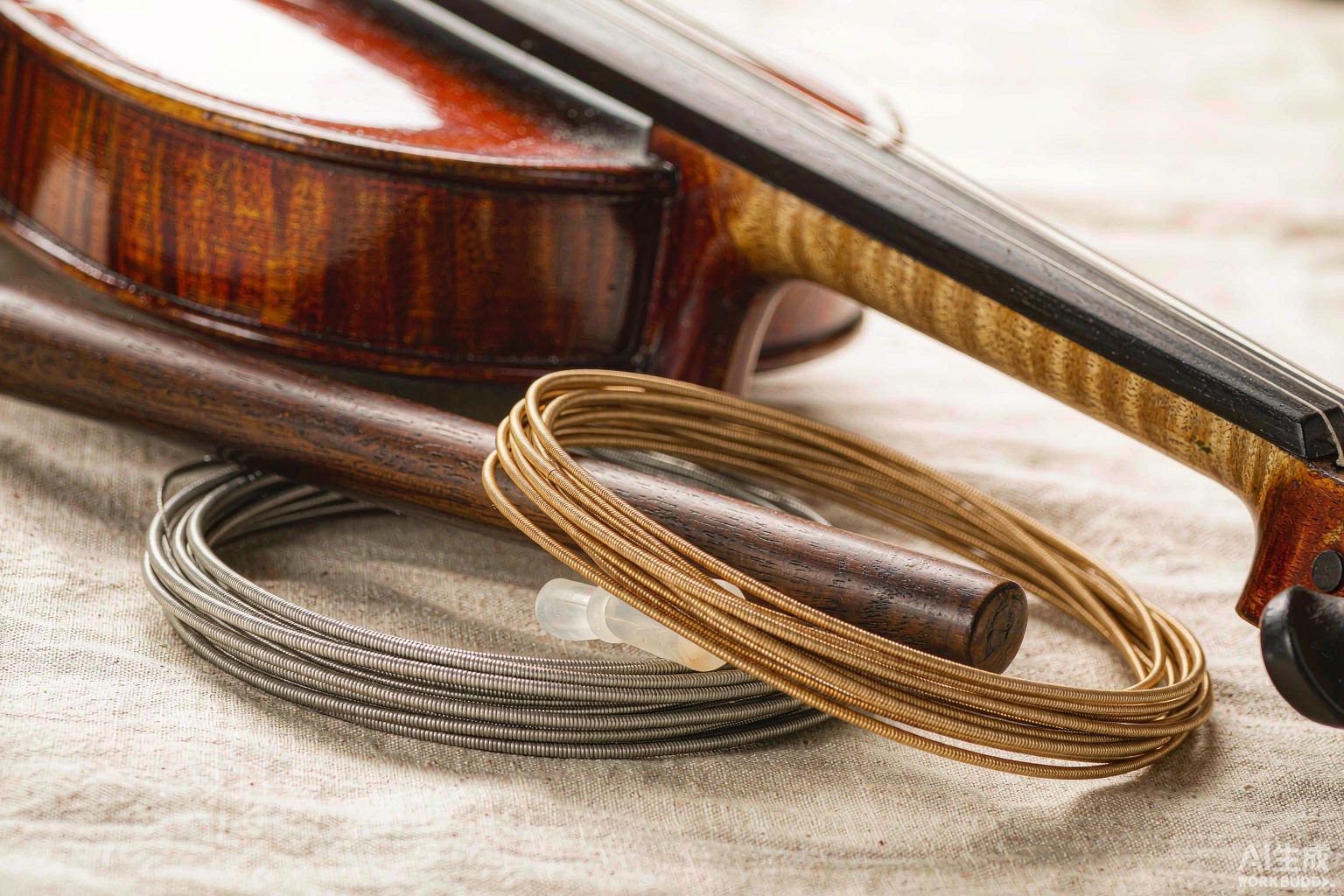
Strings are the cheapest, fastest way to change how your violin sounds — and the most common place beginners waste money on the wrong thing. This guide explains the three string families, what each costs, and how to pick without a decade of trial and error.
The three families
Synthetic core (the default choice)
A woven polymer core wound with metal, synthetic strings were invented to imitate gut tone with gut-free stability. They tune quickly, hold pitch through humidity, and offer a warm, flexible sound. Dominants are the famous baseline; Pirastro Tonica, Thomastik Infeld, and Evah Pirazzi sit at various points above it.
Gut core (the old sound)
Plain and wound gut strings produce the warmest, most complex tone — the sound of baroque and early romantic music. They take several days to settle, go sharp in damp weather, and die quickly. Beautiful for period performance; impractical as a first set.
Steel core (the practical workhorse)
Steel strings are bright, loud, and rock stable. On a small or dull student instrument they add projection the box cannot produce on its own. Downside: thinner tone color and a harsh edge on cheap instruments.
Quick comparison
| Type | Tone | Settling time | Lifespan | Typical price |
|---|---|---|---|---|
| Synthetic | Warm, balanced | 1–2 days | 4–6 months | $30–110 |
| Gut | Warmest, most complex | 3–7 days | 2–3 months | $60–150 |
| Steel | Bright, direct | Minutes | 6–9 months | $15–50 |
Matching strings to your violin
- Beginner instrument under $400: steel or budget synthetic (D'Addario Prelude or Ascente). Expensive strings on a plywood body are perfume on a potato.
- Solid-wood student instrument ($400–900): Dominants or Tonica. This is the pairing 90% of players should live with for years.
- Step-up instrument ($1,000+): experiment. Try one change at a time — all four strings first, then mix an E. The E string alone changes more than people expect.
Three mistakes to avoid
- Changing everything at once. You will not know what caused what. Change the set, play a week, then adjust one string.
- Reusing a worn E. The E is the cheapest string and the first to whistle. Replace it every time.
- Waiting until they snap. Strings lose tone weeks before they break. If your violin suddenly sounds dull, look at the strings before blaming the violin.
Thomastik Dominant with a gold-plated E — about $75
Boring? Yes. Reliable? Extremely. It is the reference sound nearly every other string is measured against, and it works on almost every decent student violin.