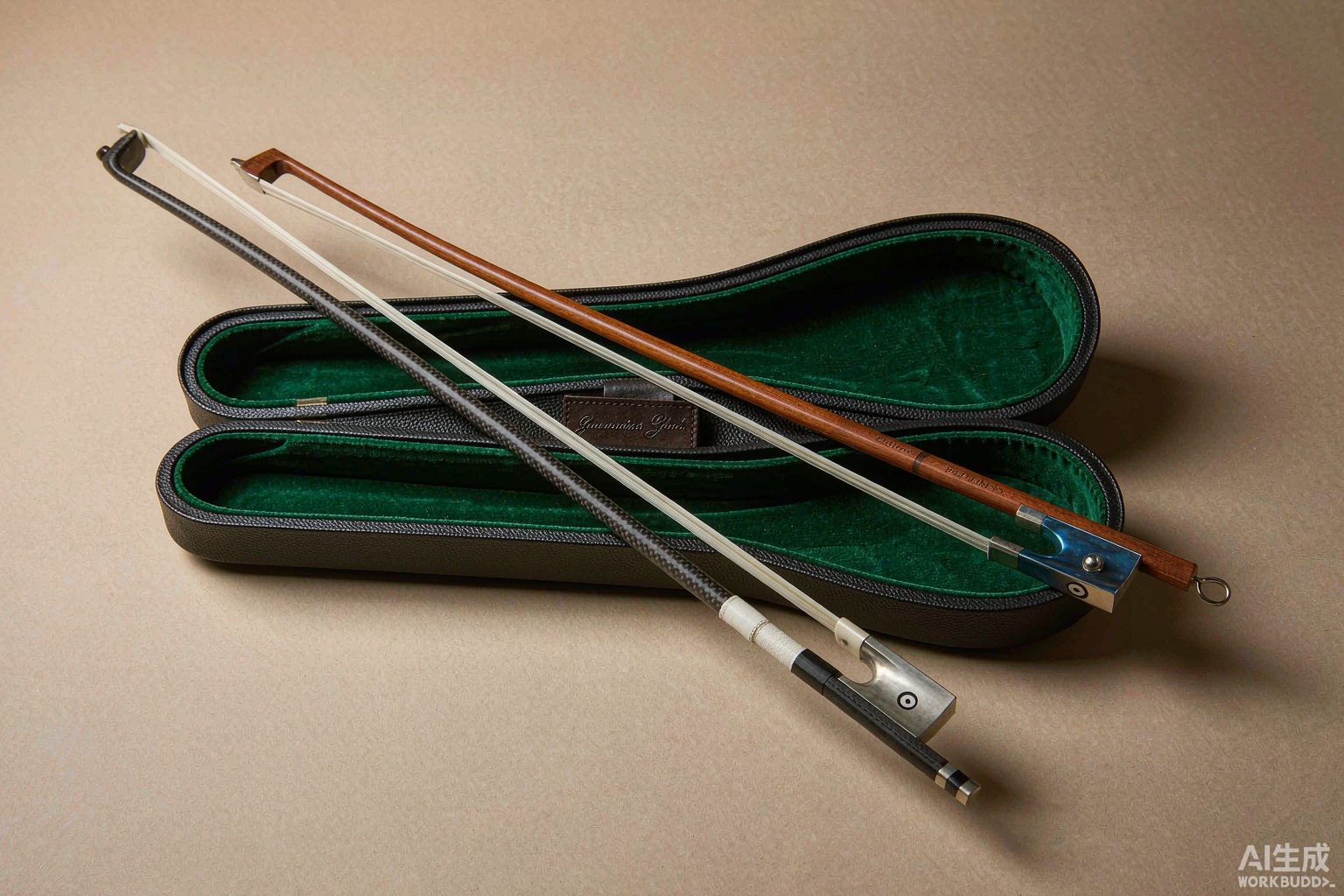
Ask three violin teachers about bow materials and you will get four opinions. The truth is less mystical than the marketing: both materials make excellent bows, they just excel at different things and different budgets. We spent two months alternating between a $90 carbon fiber bow, a $350 carbon fiber bow, and a $1,100 pernambuco bow on the same violin — here is what we found.
What pernambuco actually gives you
Pernambuco wood has a stiffness-to-weight ratio and a natural springiness that lets a skilled bow maker shape the stick so it responds rather than just behaves. In practical terms: spiccato bounces with less effort, long strokes hold even density from frog to tip, and subtle color changes register more faithfully. Those qualities are real, measurable, and worth paying for — eventually.
The catch is that pernambuco is expensive, endangered in supply, and wildly variable. A bad pernambuco bow loses to a good carbon fiber bow every time. The wood is not a guarantee; the maker is.
What carbon fiber gives you
Carbon fiber is consistent. It does not react to humidity, it does not warp if a student leaves it on a radiator, and a $300 carbon fiber bow plays noticeably like another $300 carbon fiber bow. Modern woven sticks have excellent pull for their weight, and many professional players now gig with carbon fiber precisely because of that reliability.
Where it still trails wood is in fine articulation: the very lightest off-string strokes and the last 5% of tonal nuance. Most players below conservatory level will never hit that ceiling.
Side by side
| Criterion | Carbon fiber | Pernambuco |
|---|---|---|
| Price for real quality | ~$150–400 | ~$800+ (import tiers) / $2,000+ (master) |
| Consistency | Excellent, near-identical within a model | Variable; depends entirely on the maker |
| Articulation and nuance ceiling | Good, but lower ceiling | Highest, when well made |
| Durability | Nearly indestructible | Can warp or crack with poor care |
| Humidity sensitivity | None | Moderate |
Our recommendation
Carbon fiber until Grade 5–6, then start bow shopping in person
If you play fewer than five hours a week, a quality carbon fiber bow around $300 will outperform any wooden bow at the same price. Move up to pernambuco when your teacher says your bow arm is ready to hear the difference — and then buy with your hands, not a website.
One caveat: avoid the $40 "carbon fiber" bows on marketplaces. We tested two; both had dead sticks with glass-fiber cores. At that price a decent Brazilwood student bow is the honest choice.