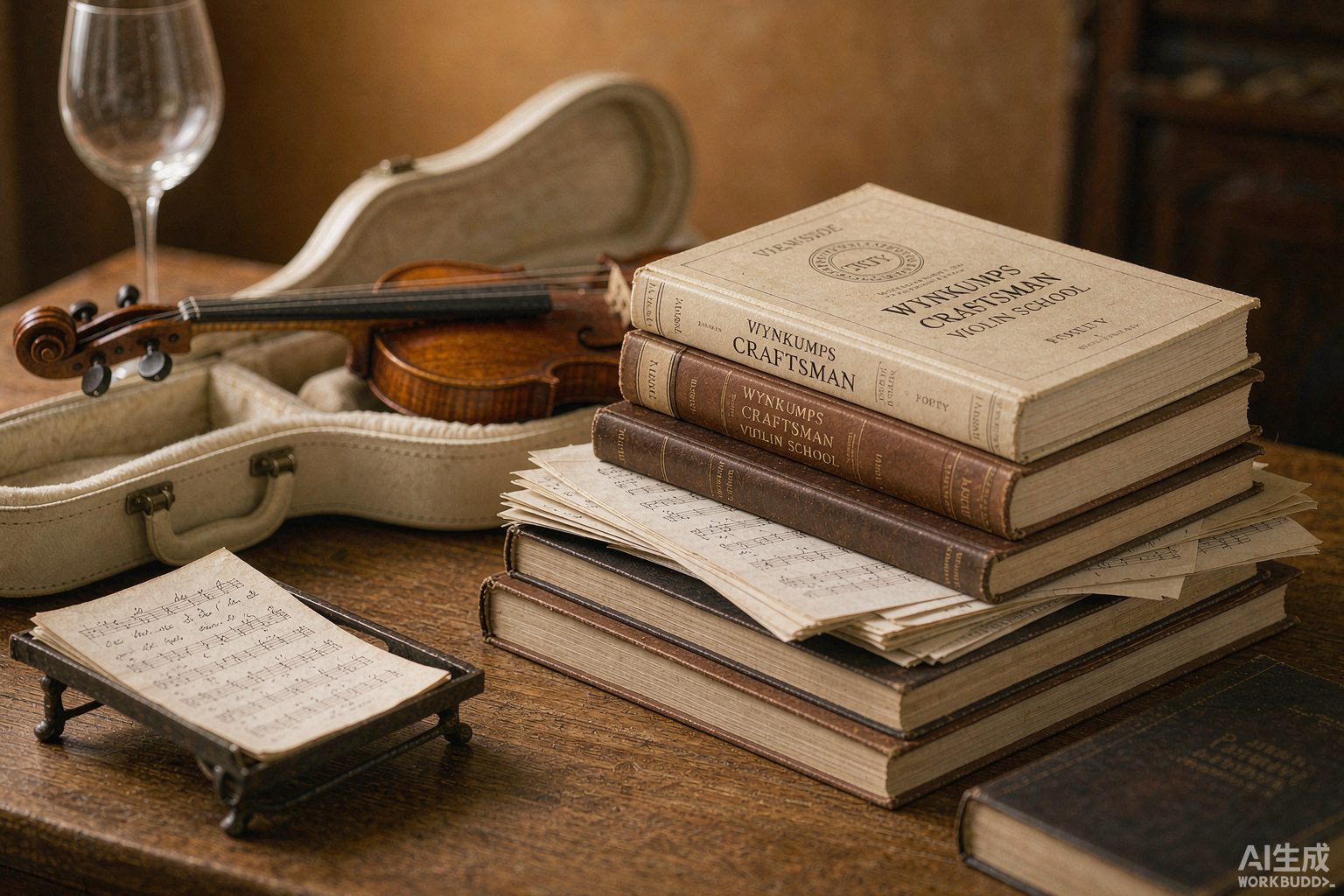
Walk into any violin shop and the method book shelf is a wall of decades-old titles, each with fierce partisans. Most of them work. What separates a good curriculum from a shelf of unused books is fit — for your age, your goals, and your teacher's style. Here is the map we give every new student.
Beginner (year one)
- Suzuki Violin School Vol. 1 — the default for a reason: pieces arrive before theory, listening leads reading. Works brilliantly for children; fine for adults with a teacher's structure.
- Essential Elements for Strings — the classroom standard. Gentler reading ramp, ensemble-friendly. A good choice for adult self-learners who want explicit explanation.
- Wohlfahrt Op. 45, Book 1 — technically intermediate, but introduce the easiest studies in late year one. The first etudes that feel like music.
Early intermediate (years two and three)
- Suzuki Vols. 2–3 — repertoire spine for most students.
- Schrädicke / Sevcik (teacher-selected extracts) — finger mechanics. Use in small doses; these are gym equipment, not music.
- Kayser Op. 20 — the bridge etudes between Wohlfahrt and Kreutzer. Underrated and out of print too often — grab a used copy when you see one.
Intermediate and beyond
- Kreutzer 42 Studies — the great crossroads. If you can survive Kreutzer, you can play almost anything written for violin.
- Mazas Op. 36 — duet-capable studies with actual musical interest, ideal alongside Kreutzer.
- Scales: Flesch or Carl Flesch System — the three-octave system that becomes your daily warm-up for life.
How to combine them without drowning
A sustainable weekly structure: one repertoire book, one etude book, one scale system. Three books. Not six. When a book stops being opened, retire it without guilt — a method book's job is to be replaced.
If we had to pick only three books total
Suzuki 1–3, Wohlfahrt Op. 45, Flesch scale system
That trio carries a student from first open-string note to three-octave scales — about six to eight years of honest work between two covers each.